An Introduction

I first became interested in 4AD, a UK independent record label founded in 1980, towards the end of the '80's. I was falling in love with the music of Dead Can Dance, Clan of Xymox, Pixies, Bauhaus and The Birthday Party and was surprised when the 4AD label sampler "Lonely Is An Eyesore" came out in 1987 that all these bands were from the same label.

After visiting a Pre-Raphaelite exhibition of some American's collection of art, I came to thinking of all this musical art that 4AD have released that may one day drift into obscurity unless someone shows it as art. So now I'm on a crusade, to collect the first ten years of 4AD's releases and exhibit the collection on 4AD's 50th anniversary in 2030. This is a big task which will have some interesting twists and turns along the way.

Showing posts with label Ivo Watts-Russell. Show all posts

Tuesday, 12 November 2013

Martin Aston - Facing the Other Way, the Story of 4AD

Your humble Jonny is on the usual rollercoaster ride of ups and downs. The pickings of late have been thin on the ground. Well actually, there’s plenty of stuff out there to buy, it’s just way overpriced and I am several million short of being a millionaire….

But then Martin Aston has agreed to do an interview with me for my little blog, such a wonderful chap, and to top it off he has mentioned me in the online version of The Wire magazine. Wow. Typically I’m up and down like a shy girls rollerblind. So I shall shut up and let you read the interview. If you haven’t purchased Martin Aston’s book, then I strongly advise you go and do it now.  It’s the first comprehensive history of 4AD, and it is, because 4AD say so, alright?

Facing the Other Way at 4AD

Purchase here :


Why choose 4AD, when there are safer and more covered label histories such as factory?

I don’t know what you mean by a “safer” label history; I only know that Factory had a shorter history than 4AD. But as you say, it’s “more covered” so why repeat someone else’s book (in this case, by James Nice)?  4AD is one of the most admired and adored record labels, independent or otherwise, and had never had a biography – so to be the first was a perfect opportunity.

Why do you think 4AD survived when the other great iconic indie labels died off? Factory / Creation?

You’d have to know the histories of Factory and Creation to really know what happened there. Like 4AD, both labels had single-minded spearheads, but Factory – under Tony Wilson’s ‘management’ - was run democratically between its founding partners, while Creation boss Alan McGhee had co-founder Dick Green, so neither were autocratic in the way that Ivo Watts-Russell ran 4AD. But Creation sold half the company to Sony, McGhee admitted he had drug problems and disappeared from the industry, whereas Green eventually wanted to work with another A&R cohort. Factory went bankrupt, but Tony Wilson – with Factory Too and F4 labels – couldn’t get anything going and then died of complications from cancer. When Watts-Russell sold his share of 4AD to his business partner Martin Mills of Beggars Banquet, there was a structure (ie Beggars) in place for Mills to carry the label on with new people running it for him.

What has been the greatest surprise discovery from putting the story of 4AD together?

Some of the earliest records had escaped my attention; I didn’t know every single record that came out on 4AD, and when I started writing about music in 1984, I didn’t go back and revisit what I had missed - I wasn’t a collector of labels (I’m still not). So hearing the likes of Rema-Rema and Dance Chapter was a thrill and an education. I was also surprised by the level of dysfunction at the label during the Nineties when there were two offices, one in LA having joined the one in London, and the lack of communication between them. But they were very trying times due to watts-Russell’s mental frailty and the difficulty in running a label with a figurehead who was unavoidably absent during that period. It’s what led to him finally giving up and severing all ties to the music industry, and heading off to live, in relative isolation, in the New Mexico desert.

Did anyone, anywhere, artists or label staff make any money away from a very basic cost of living from the label at any time during the first twenty years?

I didn’t discuss money/profit with anyone. I guess the more commercially successful bands such as Pixies, The Breeders, Dead Can Dance, Cocteau Twins and Belly made more money than lost it, but who knows? And who knows who else did? You’d have to ask them.

Do you think that the way that music has moved to a virtual format will kill off the physical format altogether eventually? Can you explain to a younger generation why this would be a shame?

The resurgence in vinyl sales shows there is a market for the musical artefact, and the beauty of artwork. I have no idea if following generations will feel the same, but limited runs can be 500 or one thousand, so it doesn’t need to be a huge audience. I just hope they do. There’s something wonderful about a beautifully designed and produced object, same as with books. Likewise the experience of watching a film in a cinema rather than at home. It’s more of a complete experience. And there is something more tangible to own.

Do you still afford time to just sit and listen to music? How do you do it and do you share the experience?

It’s harder to find time to “just sit and listen” when you have to write about the music you hear, and to consider it from the perspective of a job. There is the need to keep digging for “the next thing” – which is also a pleasure, as I do love hearing new music, especially if it’s new unto itself, ie a trailblazer rather than following a trend. But if you don’t make room for something that’s a pleasure and a release from work duties/stress, that’s not a good state of mind. So I will put music on mp3 and go for long walks, and listen to music in the car, when it feels much less like “work”. Though even then, your mind can process what you’re hearing, sometimes you find yourself “writing” something in your head without meaning to; it’s a habit that’s hard to break. As for sharing, yes, through making compilations (granted, not often, usually an end-of-year round-up or two) for friends, or via email/Facebook. I find that part of the emotional package surrounding music is to share it with others, to see if they have the same reaction as I do.

Are there any plans to move to a 4AD documentary? Have you heard of any plans from anyone else to?

There are plans for a documentary, but I can’t reveal exactly what at this point. But I had to get the book written and them promoted first, and also have a little break from 4AD: it’s not good to be totally obsessed with one project for too long a time. But I’m returning to it pretty soon. I’ve not heard of anyone else’s plans.

As a journalist, do you find the artist more flawed than the “man on the street” and if so, how have you found that affects your objectivity? 

The only way to answer that is, I have more information at my disposal about an artist, so I have more evidence of a state of mind or approach, which can include “flaws”, but it can also create a positive and empathic reaction to their situation/condition, where “the man on the street” sometimes has to rely on what the media tells him, and that viewpoint is sometimes clichéd, or sensationalist. I try to keep a balance of objectivity and subjectivity, to present the facts as they are, and my opinion of those facts, and my own hopes for what art should achieve, but also know the commercial conditions under which the production of art takes place. 

How, as a journalist, do you find the right level of publishing knowledge in the public interest and not going over the line of invading privacy or getting too personal about an artist or subject?

It’s a personal decision every time. I don’t like to sensationalise, and to keep asking the obvious questions about an artist’s most headline-grabbing piece of news. Sometimes I have no choice if I am to continue writing for someone who wants that kind of material, in which case I stop writing for them or I find ways of writing about what I want to. But the creative process fascinates me, and I want to know what artists create the way they do, it can be in intellectual and emotional reasons. They can answer my questions, or not, that’s their choice. I won’t keep nagging.

How have you found the whole experience? Would you tell your former self (before starting the book) to go ahead and do the project?

It’s been an intense, and labour-intensive, project, and you generally don’t write books for the money. But it’s also been exhilarating and extraordinary, to talk to 120 people or so, who are all connected to one central theme, and then weave it into place. I have been very lucky to have a publisher who was happy for me to tell the story of 4AD as I wanted to tell it, so I had no editorial interference, from content to word count. I don’t know how often that’s the case. So no regrets

Any new works in the pipeline?

In my head, yes, but again, nothing I want to share at this moment. I’ve said before that writing a book means you don’t get to leave the house much, and I don’t enjoy too much isolation in this way, so maybe I need more a prolonged break before getting lost in something again. The end usually justifies the means, so we’ll see.  

Sunday, 10 June 2012

The Full AXIS Collection


After acquiring the first AXIS record a few months ago I realised that I had all 4 first releases. This realisation didn’t last very long and somehow I got side tracked. I’ve just figured it out again and got very excited (I’m easy to please!).

The first releases of 4AD weren’t actually under the name of 4AD. Ivo Watts-Russell and Peter Kent were given a budget from the independent label Beggars Banquet and told to start a new label. Ivo and Peter started calling this new label AXIS. The first four releases were made under this label name until they realised there was another record label already called AXIS. The record label they may have been in trouble with could be the Axis label from Australia, a budget label that seemed to mostly deal with EMI re-issues.

Realising that they couldn’t keep the label name AXIS, Ivo Watts-Russell and Peter Kent changed the label name to 4AD.

But four releases had already been produced with the label name as AXIS.

AXIS 1 – The Fast Set – Junction One
AXIS 2 – Bearz – She’s My Girl
AXIS 3 – Bauhaus – Dark Entries
AXIS 4 – Shox – No Turning Back


The first release with the catalogue number AXIS 1 was by a band called The Fast Set and their 7” single Junction One. This was written by David Knight and could be the same person who was involved with Shock Headed Peters and also Danielle Dax later in the decade.

This single seems to sell around the £35 mark, but can sell for over £50. It’s difficult to find this in good condition as the sleeve was made from very thin paper.


The second release was by a band called Bearz with a 7” single called She’s My Girl.

This single on average fetches around £17, but rarely goes for above £19, although that doesn’t stop traders trying. It looks as though it was also released in Italy on the WEA label, with a promo version released as well. Both of these I am yet to confirm


The third release was a lot more successful. The band was Bauhaus and the single called Dark Entries. This wasn’t Bauhaus’ first single as they had released a single before with the label Small Wonder. The success of this single was so great a further 5 versions of this single were subsequently released. I will have a look at all 6 versions soon.

This is a great release to try and get hold of, as traders don’t always know which version is worth more than another, and versions of Dark Entries turn up all the time and are quite common. This version, however, can easily be worth £18 and can fetch up to £35. But some traders will also try their luck, this trader is asking £80!


The fourth and final release from AXIS was from a band called Shox, with their 7” single No Turning Back. This release is also difficult to get in good condition as the sleeve is white, which always dates very easily with printed media. For some reason this seems to fetch a good price, around £22, and can fetch over £48. I’m not sure why this is. This single may have got re-released by Beggars Banquet, again I’m yet to confirm this


The AXIS releases have “A”XIS on side A and “B”XIS on side B


So there you go. The complete AXIS releases. Out of these the Bauhaus Dark Entries single is the most interesting as it got re-released a further 5 times. I was struggling to get all six versions, but if the last one I purchased this last week arrives, I should have all six to show you. Watch this space…. 

Thursday, 15 December 2011

An Interview With Pieter Nooten

I don’t really get excited about celebrity, people are only human after all. Most celebrities are famous nowadays for having no talent whatsoever. I do have a great respect for some people who are talented though and show signs of being more than the average human. I then add greater respect for those talented humans that also have some semblance of realism and modesty. So that is probably why I don’t admire that many people as you can probably imagine. I find most people with talent have an equally sized ego to go along with it.

Don’t get me wrong, I know from personal experience, that in order to be able to perform in front of peers, you need to have some sense of ego to be able to pull it off successfully. There is nothing worse than watching an artist that has no faith in their self or their art. Then, of course, there is the matter of living in a world full of people with talentless ego’s who have an insane jealousy of those with real talent.

The saying goes that history is written by the victors. In the modern world is seems to be written by those with the biggest mouth and the biggest ego. Thankfully, in the modern age, there are also other folk with a passion for truth and an eye that can see past the egos and feather displays.


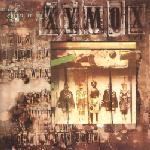
Were am I going with this, you may ask? Well, one musician I greatly admire is Pieter Nooten. Pieter was one third of Clan of Xymox in the eighties. The Clan of Xymox album Medusa made my all time top ten albums (see previous blog entry). Pieter Nooten was the man who edged Clan of Xymox away from being just another goth band, or just from being New Order mark II. I am very fortunate to have been able to put a few questions to Pieter just this last week :

Before meeting Anke and Ronny (who formed Clan of Xymox), what kind of bands were you playing with?

When I was around 16 I used to play drums and later the bass guitar; always involved with local indie bands. Later I bought one of the first tascam 4track cassette recorders and got into composing.

Was there a clear direction in music style when you joined Anke and Ronny (Clan of Xymox), or did your sound develop?

I met them in Nijmegen in 1980 when they were a duo and we got on together immediately, being influenced by the same bands and sounds of the time. We desperately wanted to merge the new developments in music (affordable synths, drum machines, triggering etc.) with the new guitar music of that era.

Was Subsequent Pleasures self released? Why were most of the original copies of Subsequent pleasures destroyed?

I was not involved with the making (or destruction) of SP.


We met Dead Can Dance when they toured The Netherlands for the very first time and Brendan introduced us to Ivo Watts.

How did you personally feel about the way the band was represented by 4AD’s artwork?

They came up with the basic design. We were great fans of 23 Envelope.


Brendan and I became quite good friends for a while; he was –just like me- a big admirer of medieval and baroque music as well as more contemporary minimalist composers like Arvo Part. Brendan and I should have worked together but it never happened.

What was it like to work for 4AD? Did you have any good relationships still going today?

Oh yes. Friends for life I would say, even though I may not speak to them on a daily basis. I still keep in touch with Brendan, Vaughan and Ivo.

On the Medusa album there are some wonderful, even progressive, changes and styles, which is unlike most of the similar genres typical output of the time. Where did this influence come from, and were these non-traditional methods of non verse - chorus structures universally enjoyed within the band, or did it cause tensions?

At that time I was massively impressed and influenced by contemporary classical music as well as the more experimental pop acts (Tuxedo Moon, Peter Gabriel, Kate Bush, This Heat etc…). I definitely wanted Xymox to develop an influential and ground breaking sound. But Ronny wanted to become famous and produce more commercial sounding material.

Did you have any influence in producing the Medusa album?

Absolutely. I wrote a lot of the material for that album (AND the first). At the time we were all involved with the mixing and production of the albums. john fryer was the main producer and we listened to him but also came up with our own suggestions. Sometimes we would all be hanging over the mixing desk, one changing e.q's and someone else adding velocity etc

How did the work for This Mortal Coil work come about, what are your memories of that experience?

Ivo had a tape of demos of me and simply asked me to deliver that particular song for TMC. John Fryer, Ivo and me recorded it in London.

Have you found a greater appreciation recently for your work done with Clan of Xymox, now that the more recent incarnation of the band shows a distinct lack of your flare?

What can I say… I do get mails now and then. I am proud of what I was capable of at such young age and happy that this inspiration has never left me. On the contrary, it has evolved. My music becomes more and more mature and drifts slowly further and further away from pop music.

How much did you contribute to Anka’s album? What was it like to work with her again? Are there any plans to work with with her again in the future?

We both worked on Cocoon Time when we both lived in London and everything seemed to work out, before the record company that signed us sort of collapsed, as a prequel to what was going to happen to most of them later on…Anka and I have always worked together pretty nicely; we did most of the technical stuff with Xymox.


Absolutely. Mind you, I lost interest in most pop music at a young age already and my influences have always been kind of different. I do NOT have anyone in pop music to look up to so I am not trying to sound like anybody or anything. The music I write now, comes freshly from or should I say to, an open mind.

I have seen references that say you are the father of Dark wave, do you see any truth in that? Do you have any pride in your contribution?

I have never said such! Dark wave? What is that to begin with? Ha-ha.


It’s more cutthroat and backstabbing now than it was back then. But also, there is more opportunities then ever before. There is no money to be made from albums, and maybe that’s a good thing. Artists need to get out of their comfy zone to get noticed.

What are you working on now and what is inspiring you?

I have almost finished my next album. Nothing inspires me more then wonderful music but I am afraid it’s mainly music written centuries ago. This said, it doesn’t mean I am closed of from the present. I keep a close ear to any new music that’s out there.


To find out more about Pieter Nooten :


The music industry has never been kind to it’s artists, do you think the music industry is any worse today?

Is a more ambient direction a subconscious path or a consequence of age?

What are your memories of Dead Can Dance from those early encounters? Have you ever thought of working with Brendan Perry or Lisa Gerrard?

Do you recall how Clan of Xymox became involved with 4AD?